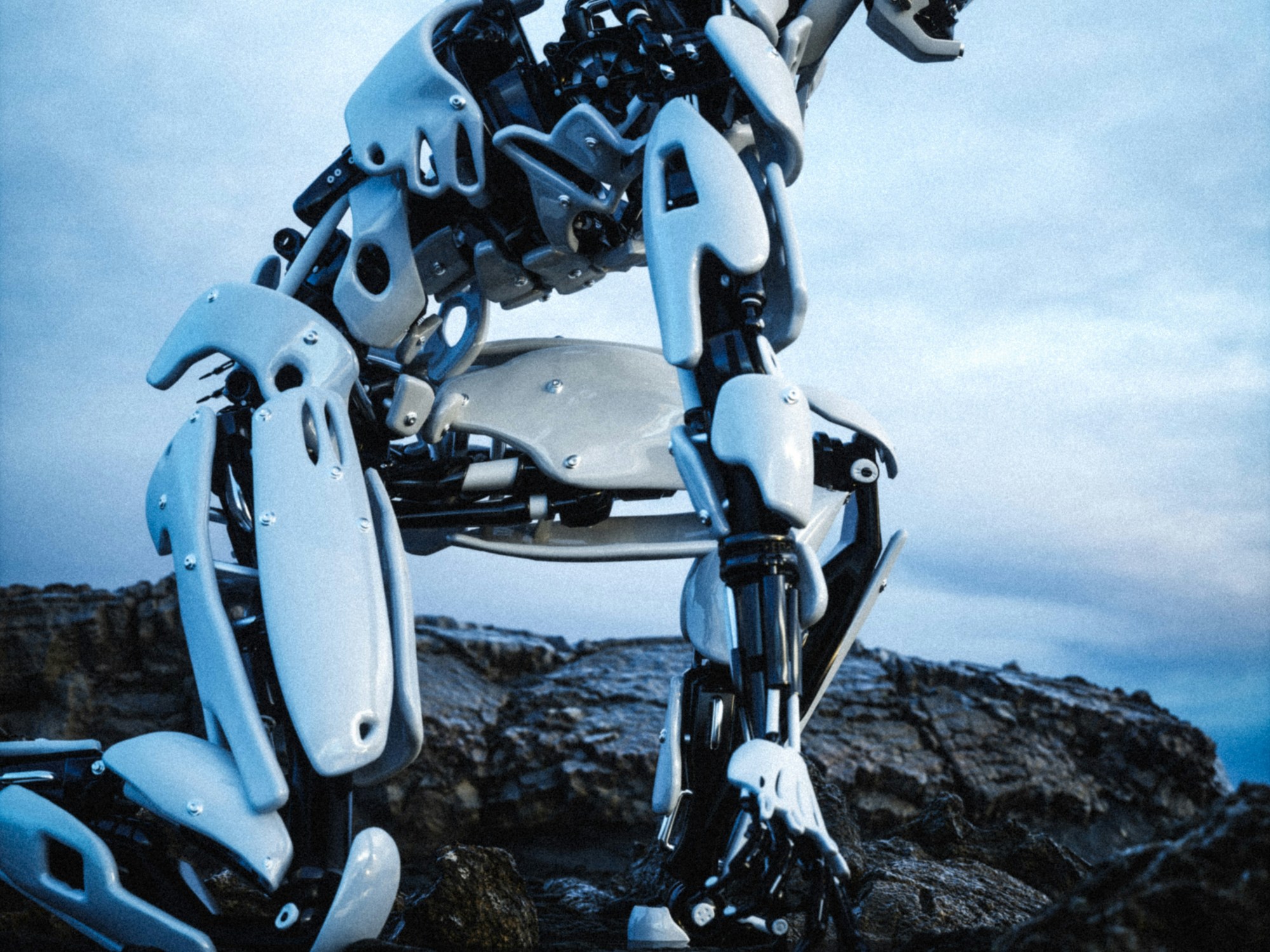
After watching the documentary Cyborgs Among Us, released by Deutsche Welle, about the growing phenomenon of cyborgs, I feel compelled to share a few thoughts and arguments against this direction, based on biblical principles and my personal experience as a believer who has come to know Christ personally.
I’d like to begin by pointing out that all of creation begins in the book of Genesis, the very first book of the Bible. There, we see that everything was created by the power of God’s word—a reality far beyond human understanding. Humans were made uniquely, in a special way: “Then the LORD God formed man from the dust of the ground and breathed into his nostrils the breath of life, and the man became a living being” (Genesis 2:7). That’s where we get the phrase, “from dust we came and to dust we shall return.”
The first argument I would make against the cyborg phenomenon is found in Genesis 1:26, where God says, “Let Us make man in Our image, according to Our likeness.” This shows that the way we were created—our bodies with all their complexity, our minds, and our spirits—reflects something of God’s image. So when humans attempt to alter that image by adding artificial enhancements or powers, we risk moving away from that divine likeness and replacing it with something artificial.
Another key point is that many who promote transhumanism express a desire to live forever or to gain godlike abilities. But this desire is not new—it echoes the sin of Lucifer, who also longed to rise above God. We see a similar example in the story of the Tower of Babel (Genesis 11), where humanity united in pride to build a tower reaching to the heavens. God responded by confusing their language and scattering them, putting an end to their ambition. The message is clear: trying to become like God never ends well.
God alone is sovereign over life and death. In Job 14:5, we read, “Since his days are determined, the number of his months is with You, and You have set his limits so that he cannot pass.” No matter how much we try to extend life through technology, it will always be God who decides when our time is up.
Another powerful argument comes from 1 Corinthians 6:19, where Paul says, “Do you not know that your body is a temple of the Holy Spirit, who is in you, whom you have received from God? You are not your own.” If our bodies are God’s temples, we are called to respect and care for them—not to alter or upgrade them in ways that stray from His original design. God made us enough. We are already complete in His eyes. We don’t need to install a chip to open a car or attach an implant just to charge a phone. These things may seem helpful for others , but they disconnect us from our true nature.
On the medical side of things, I do believe that God works both with and without medicine. He can perform miracles through the hands of doctors, or directly, without intervention. But I also believe that illness or disability, when allowed by God, has a purpose. I believe—without a doubt—that He can restore what is broken, bring dry bones back to life, and heal what human knowledge cannot. That’s why, for me, becoming a cyborg is not a viable solution. Yes, maybe a prosthetic eye or something similar that doesn’t contradict God’s principles could be acceptable—but nothing more.
To conclude, I sincerely believe this whole movement is an exaggeration. If God had wanted us to be programmed like robots, would he created us that way? But He didn’t. He gave us free will, the ability to feel, to choose, to love. That is what makes us human. And maybe, instead of turning ourselves into machines, we should focus on becoming more compassionate, more kind, more like the image of Christ. Robots will never have what we have—empathy, emotion, and the ability to love. And in the end, only Christ is the Truth and the Life.
VANESA PĂCURAR, clasa a XI-a,
Filologie – Intensiv Engleză

Free stock background image
SCHOOL Bit: Minds wide open
 SCHOOL Bit